← Back to Scholarship Resources
Best Scholarship Interview Answers for Common Questions
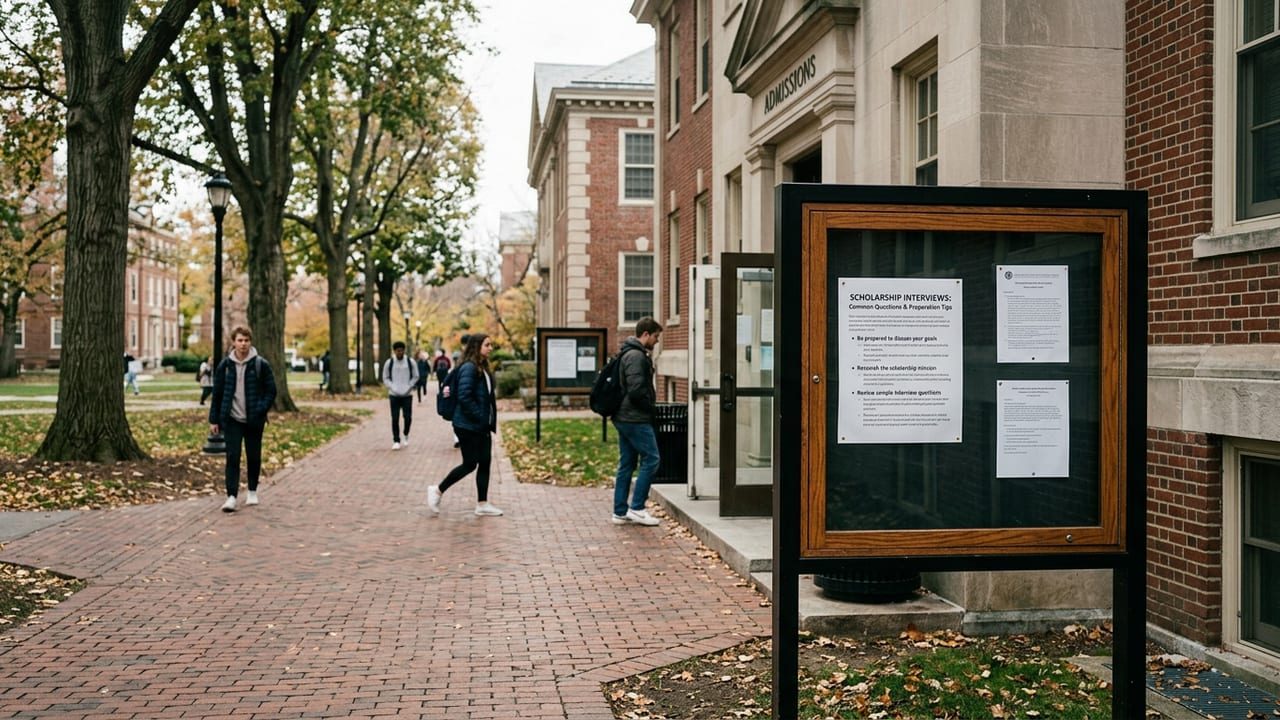
Scholarship interviews can determine whether your academic dreams become a reality, yet many students lose out due to poor preparation. Research shows that well-prepared candidates tend to make stronger impressions and secure more awards. By mastering effective answers to common scholarship interview questions, you present a memorable, authentic profile that appeals to selection panels. This resource lays out detailed, practical responses and a clear preparation roadmap.
Common Scholarship Interview Questions and Effective Answer Strategies
Scholarship interviews focus on revealing your character, leadership, motivation, and fit for the award. These questions are similar across many scholarships, allowing you to prepare solid, relevant answers. Here are the top questions you’re likely to encounter with tested response approaches:
1. Tell me about yourself
Your response should be concise but compelling: outline your academic highlights, relevant extracurricular activities, and core personal qualities. Emphasize aspects that align with the scholarship's goals. Example:
"I am a senior majoring in environmental science with a 3.9 GPA. I serve as president of my school’s eco-club, where I've led initiatives to reduce campus waste and engage local communities in sustainability projects. I’m passionate about creating impactful environmental policies, which I plan to pursue in college."
2. What are your strengths and weaknesses?
Choose strengths that directly support your scholarship candidacy, such as teamwork, problem-solving, or dedication. For weaknesses, pick a real but manageable area and demonstrate active self-improvement.
Example strength:
"My strength is analytical thinking. Recently, I designed a budget-friendly water filtration system for a science fair, which improved water quality for local households."
Example weakness:
"I have struggled with speaking in large groups, so I have joined the debate club to improve my public speaking skills and confidence."
3. Why do you deserve this scholarship?
Combine your achievements, leadership roles, financial need (if applicable), and future aspirations in your answer. Focus on how the scholarship will enable you to contribute positively to your field or community.
Example:
"The scholarship will relieve my financial burden and allow me to focus fully on public health research, which is my career goal. My academic success and volunteer work at local clinics demonstrate my commitment and potential to make a difference."
4. Where do you see yourself in five years?
Align your long-term vision with the benefits offered by the scholarship. Be specific and realistic, showing clear motivation and planning.
Example:
"In five years, I aim to complete my bachelor's degree in computer science and work with a company developing accessible educational technologies, helping reduce learning gaps worldwide."
5. How do you demonstrate leadership or community involvement?
Share concrete examples that showcase your impact and learning. Use the STAR method (Situation, Task, Action, Result) to make your story compelling.
Example:
"As captain of my soccer team, I organized weekly practices and a charity match for local youth. This experience taught me effective team motivation and event planning, resulting in over $2,000 raised for community sports programs."
6. What motivates you?
Be sincere in sharing the source of your drive—whether it’s overcoming personal challenges, curiosity, or the desire to help others. Connect it to your academic and career goals.
Example:
"Growing up in a low-income neighborhood, I’ve seen the impact of poor healthcare firsthand. This motivates me to excel in my studies and become a public health advocate."
Seven Comprehensive Steps to Mastering Scholarship Interview Answers
1. Analyze the Scholarship’s Purpose and Values
Dive deep into the scholarship description, mission statement, and previous awardees’ profiles. Tailor your answers to reflect these elements authentically.
2. Inventory Your Achievements
List academic results, leadership experiences, volunteer work, and personal growth stories. Pick those most relevant to the scholarship’s focus.
3. Draft Answers Focused on Impact
Write clear, concise responses emphasizing your role, the challenges faced, and the outcomes achieved.
4. Rehearse with Feedback
Practice aloud with mentors, teachers, or friends. Record yourself to evaluate your tone, clarity, and body language.
5. Prepare Behavioral Answers Using STAR
For questions about experiences, use the STAR method to structure your response:
- Situation: Context
- Task: Challenge or responsibility
- Action: What you did
- Result: Outcome and learning
6. Plan Logistics and Presentation
Choose professional attire consistent with the scholarship culture. Confirm interview time, location or platform, and technology if virtual.
7. Develop Mental Readiness
Practice stress-management techniques like deep breathing, visualization, or positive affirmations. Sleep well the night before.
Practical Tips to Shine During Your Scholarship Interview
- Dress the part: Opt for neat, professional clothing that fits the formality expected.
- Arrive early: This reduces stress and allows you to compose yourself.
- Pause and think: Take a moment before answering to ensure your response is thoughtful.
- Eye contact and posture: Maintain natural eye contact and an open posture to convey confidence.
- Answer fully but concisely: Stay on topic, and avoid overly long tangents.
- Show genuine enthusiasm: Smile and express interest; passion is contagious.
- Ask insightful questions: Prepare 1-2 questions about the scholarship or institution to demonstrate engagement.
Sample Scholarship Interview Answers
Q: Tell me about yourself.
"I'm a dedicated biology student with a 4.0 GPA, actively involved in our school’s science outreach program. I mentor younger students in STEM subjects and volunteer at community health clinics. I’m eager to advance my education in biomedical research to contribute to cancer treatments."
Q: How do you handle weaknesses?
"I used to procrastinate on large assignments, which jeopardized my time management. To overcome this, I adopted a weekly planner and set internal deadlines. This strategy has greatly improved my productivity and reduced stress."
Q: Why do you deserve this scholarship?
"I believe my commitment to academic excellence, leadership in community service, and financial need qualify me. This funding will enable me to pursue graduate studies without financial barriers, equipping me to serve underserved populations as a social worker."
Frequently Asked Questions
What are the key scholarship interview questions to prepare for? Typical questions include "Tell me about yourself," "What are your strengths and weaknesses?", "Why do you deserve this scholarship?" and "What are your future goals?" Preparing thoughtful answers with supporting examples is essential to impress.
How should I prepare to answer scholarship interview questions confidently? Begin by researching the scholarship thoroughly and understanding its values. Practice answering common questions aloud, ideally in mock interviews, to build confidence and receive constructive feedback.
What is the best approach to answer 'Tell me about yourself' effectively? Keep your introduction academic and focused on relevant activities. Mention your major achievements, interests connected to the scholarship, and what motivates you, finishing with your educational aspirations.
How can I present my strengths and weaknesses authentically? Choose strengths related to the scholarship criteria and back them up with examples. When discussing weaknesses, select ones you’re actively working to improve, demonstrating self-awareness and growth.
What strategies help me stay calm and confident during the interview? Prepare thoroughly so you feel ready, practice breathing exercises beforehand, and use positive self-talk to reinforce your capabilities. Remember that interviewers want to know the real you, not a perfect script.
Continue Reading
- How to Apply for Scholarships — practical steps to organize your application process and avoid rookie mistakes
- Scholarship Deadlines Explained — simple ways to track deadlines and avoid missing key dates
- Can You Combine Multiple Scholarships? — understand how stacking scholarships works and which rules to watch