← Back to Scholarship Resources
How to Compare Scholarship Trust Signals Across International Awards
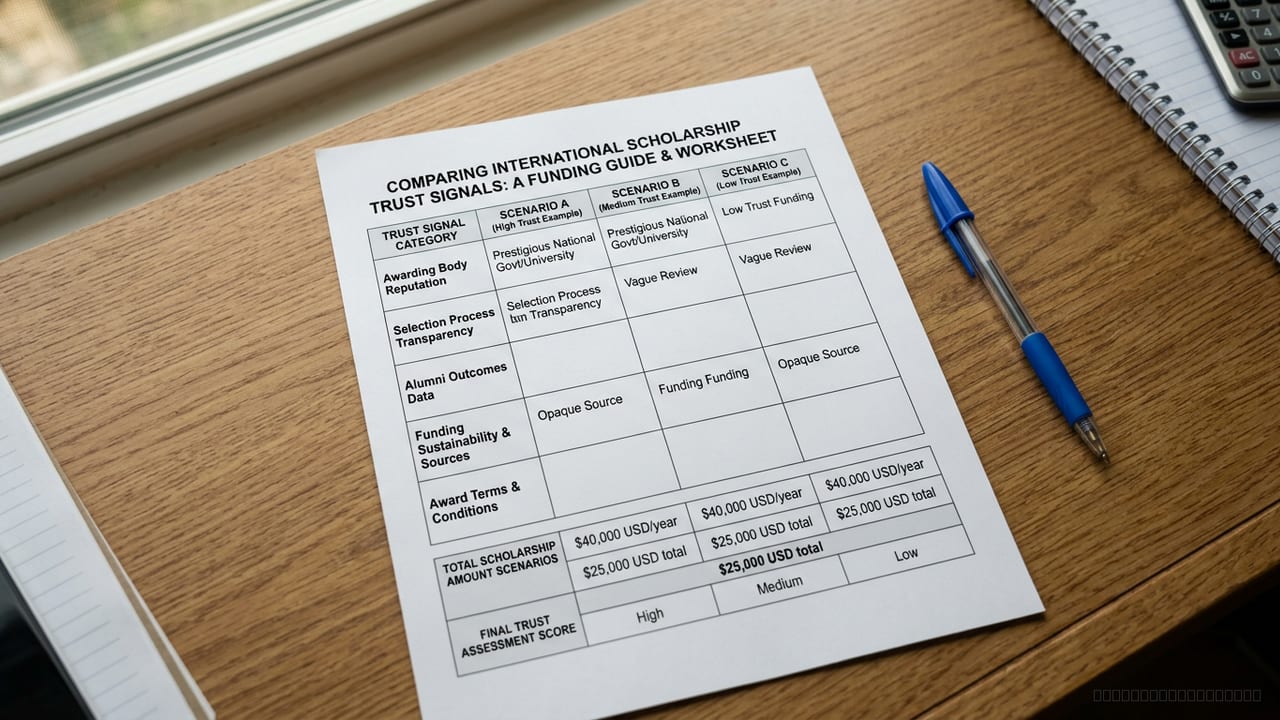
More than five million international students seek scholarships annually, yet a significant number fall victim to fraudulent offers. According to global education watchdogs, nearly 15% of scholarship seekers worldwide encounter misleading or fake awards. This pressing reality makes understanding and comparing scholarship trust signals essential to protect your time, data, and career prospects.
Step-by-Step Process to Assess and Compare Scholarship Trust Signals
Careful evaluation of trust indicators can differentiate genuine scholarships from scams. Here is a detailed stepwise approach to compare and validate scholarship trust signals:
1. Identify the Official Sponsors and Backers
Every legitimate international scholarship is backed by a credible sponsor or a consortium, such as government bodies (e.g., Fulbright Program by the U.S. Department of State), universities, or charitable foundations (e.g., Gates Millennium Scholars Program).
- Practical check: Visit the official websites of the claimed sponsors and verify if the scholarship is listed there.
- Cross-check: Contact the institution's scholarship office directly via official email or phone numbers.
- Example: A scholarship stating sponsorship from the British Council should be verifiable by visiting the British Council’s official scholarship listings.
2. Scrutinize Application Process Transparency
A trustworthy scholarship clearly explains application steps, evaluation criteria, deadlines, and required documents upfront.
- Checklist: Look for explicit application timelines, details about essays or interviews, eligibility requirements, and scoring mechanisms.
- Warning signs: Vague instructions, sudden deadline changes, or requests for extra documentation post-deadline often indicate poor legitimacy.
3. Check Published Lists of Beneficiaries and Alumni Feedback
Proven track records enhance a scholarship’s credibility. Past recipients often give testimonials or are publicly listed.
- Some awards publish the names of beneficiaries annually or maintain an alumni page with contactable members.
- Example: The Erasmus+ scholarship program provides detailed reports and lists of awarded students, which can be cross-examined.
4. Verify Accreditation and Official Recognition
Many scholarships feature accreditation logos from recognized educational authorities or affiliating bodies.
- Verify: Don’t rely solely on the presence of logos; confirm their validity by checking with the accreditor.
- Accreditation examples include verification by UNESCO, local ministries of education, or national scholarship boards.
5. Analyze Communication Quality and Support Channels
Legitimate programs maintain responsive and professional communication channels:
- Confirm availability of multiple contact methods: phone, email, social media with active engagement.
- Initiate a query and monitor response promptness and clarity.
- Beware of suspicious email domains or extremely delayed/unhelpful replies.
6. Cross-Reference Scholarship Details on Reliable Platforms
Use official educational portals and scholarship databases such as government-sponsored portals or scholarship aggregator sites.
- Compare how the scholarship is presented across different platforms for consistency.
- Check: Look for reviews or discussions in education forums or trusted international student communities.
Pro Tips to Strengthen Verification of Scholarship Credibility
- Use official portals first: Start your research on trusted sites like the education ministry’s pages or recognized databases.
- Document everything: Keep copies of all communications, official announcements, and reference screenshots of websites.
- Consult alumni groups: Reach out to former scholarship recipients on LinkedIn or student forums to confirm experiences.
- Avoid premature personal disclosures: Never share sensitive documents such as passports or bank details before thorough verification.
- Be cautious with application fees: Genuine scholarships rarely ask for upfront fees; if they do, seek detailed justification and cross-check legality.
Essential Documents to Request or Examine Before Applying
When comparing scholarships side-by-side, obtaining and reviewing the following documents is vital:
- Official scholarship brochure or announcement: For comprehensive details and validating dates
- Application guidelines: Covers eligibility, deadlines, selection procedures
- Sponsorship or partnership agreements: Provides transparency on funding sources and official endorsements
- List of previous recipients or beneficiary reports: Verifies authenticity through verifiable past winners
- Terms, conditions, and refund policies: Clarifies applicant rights and fee structures
Having these on hand enables direct feature comparisons and uncovers inconsistencies.
Benchmark Requirements That Legitimate Scholarships Adhere To
When evaluating awards, the following baseline criteria typically indicate legitimacy:
- Transparent eligibility framework (e.g., nationality restrictions, academic requirements)
- Clearly published deadline and selection criteria
- No upfront payment requirement unless explicitly justified
- Clear, frequent communication about application status
- Publicly accessible contact information
Abnormalities in these areas justify skepticism.
Frequently Asked Questions
What are the key trust signals to look for in international scholarships?
Look for official sponsorship by credible institutions, transparency in the application process, verified lists of past beneficiaries, recognized accreditation logos, and active, prompt communication channels. These collectively signal the scholarship’s trustworthiness and integrity.
How can I verify if an international scholarship is legitimate?
Begin by cross-referencing the scholarship information with the official websites of the claimed sponsors. Contact these institutions directly if needed. Additionally, seek out alumni testimonials and ensure that accreditation claims match records from recognized educational authorities.
Why is it important to compare trust signals across different scholarships?
Comparing trust signals across multiple awards helps you avoid scams and prioritize reliable scholarships. This process reduces wasted effort and increases the likelihood of success by focusing your applications on credible and recognized opportunities.
Are there common red flags that indicate a fake scholarship?
Yes. Red flags include absence of official sponsors, unclear or inconsistent application instructions, demands for advance fees without clear justification, no available information on past winners, and limited or unprofessional contact options. These suggest the scholarship may be fraudulent.
What sources can I use to check the credibility of scholarship providers?
Trusted sources include official government education portals, university scholarship pages, certified international scholarship databases, and independent review platforms. Additionally, consulting educational consultants or directly contacting educational institutions can enhance verification.
Continue Reading
- How to Apply for Scholarships — practical steps to organize your application process and avoid rookie mistakes
- Scholarship Deadlines Explained — simple ways to track deadlines and avoid missing key dates
- Can You Combine Multiple Scholarships? — understand how stacking scholarships works and which rules to watch